
When we’re learning how to use our emotional system as we engage with and find our place in life, the problem is that we need to make mistakes and to get torn up emotionally in order to learn at least some of the time. For example, when we’re inexperienced and naïve, and we start dating, it’s hard for us to see danger in this process. We tend to go in with open hearts and yearning, and it isn’t until things fall apart and we get hurt that we start to understand that there are hazards along the way.
Getting beat up and torn down is an inherent part of how a healthy emotional system is shaped. The only thing we can do about this is to learn to respond skillfully to these rather mild-but still impactful-types of traumas so we can fully recover from and learn from them without allowing the emotional damage to persist. This is a critical part of learning how to nurture the healthy use of your emotional system, and it’s where we as a culture chronically fall short.
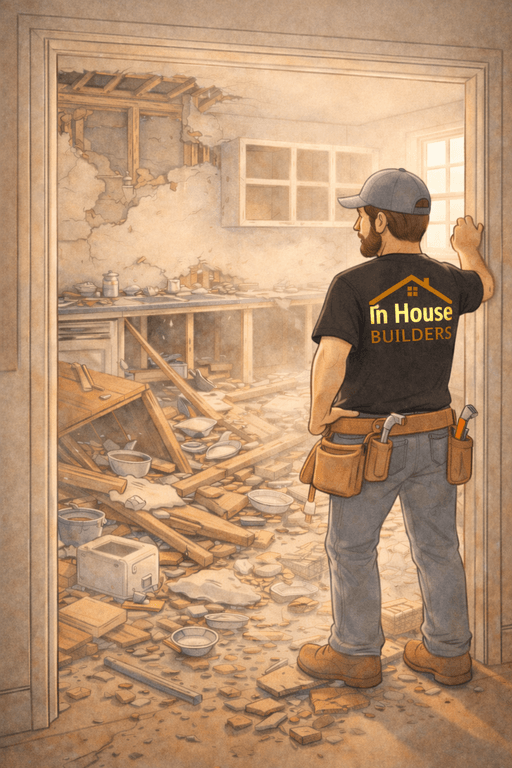
When organic systems get damaged, it’s akin to having a hand grenade go off in your kitchen. You can’t rebuild the kitchen with all the broken-up detritus taking up all the space, so the debris needs to be cleared out so your system can get busy rebuilding. With emotional damage, the detritus that’s bogging down the system’s ability to heal is the negative emotion that the experience generates. Because negative emotion needs to be tangibly released, our emotional system has established pathways that are used to evacuate negative emotion just as we have the same types of pathways to evacuate physical wastes—pooping, peeing, sweating, and exhaling.
The problem with tangibly evacuating negative emotion is that it often hurts because it’s a result of damage that occurs to our emotional software. To do it effectively, you need to feel it, and then you need to learn to handle it so you can help it flow in healthy ways. Negative emotion—anger, sadness, fear, worthlessness, shame, feelings of isolation and powerlessness—should generally be understood as toxic emotional detritus that is meant to be released. This is similar to having poop and pee that needs to be released in healthy ways so our physical bodies can stay healthy. When we decide it’s better to keep it in because we don’t want to have to feel the pain, then all we’re really doing is guaranteeing that our emotional systems can’t heal and return to a state of wholeness.
In this culture, we learn that to poop and pee in healthy ways is logical, healthy, and necessary. But when it comes to evacuating negative emotion, we learn that to keep it in and to push it down is to be tough and sensible. By deciding that an organic need to evacuate is toxic and unseemly—generally because it demands a type of vulnerability and experience of pain that we’ve decided is weak—we set the stage for the normal process of getting torn up emotionally that comes with learning how to use our emotional systems functionally to lead us into a degradative downward spiral. The more we inevitably get torn up, the more we store our emotional pain inside us and don’t recover from the damage that’s been created. Over time, our negative backlogs gain strength and ultimately demand to be expressed in some way, shape, or form.
I went through quite a lot of severe emotional trauma when I was a boy (01 The struggle begins), so you would expect someone like me to have been really torn up at deep emotional levels. But many that struggle with emotional issues and problems don’t experience severe trauma, so how do they become debilitated at their cores? I usually explain this process in terms of incurring financial debt. If you bought a sandwich for lunch every day, and put the $10 cost on a credit card that you decided to not pay off and to ignore, in a month, that small debt has become $300, and in a year it has risen to over $4000 with interest added. In 10 years, you’ve got a debt somewhere between $50-60,000. When the collector finally comes knocking, you’ll be completely confused by the size of your debt because all you’ll remember is not having paid for some $10 sandwiches.
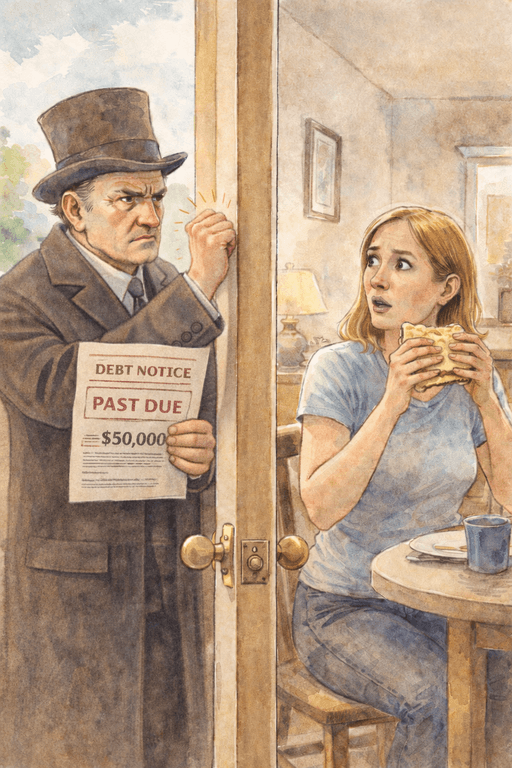
Every time we step into life in ways that tears us up emotionally, we incur a debt that needs to be paid. If you want the sandwich, you have to pay the price. That’s part of the inherent responsibility that comes with having an emotional system. When you learn to mostly suppress, ignore, and cover over this debt, it gets stored inside us where it gets shuts down and is pushed to the background. This cumulative emotional debt degrades the integrity of your system, and so your system gets weaker and more debilitated at deeper levels the further you stress it and add more damage to it. Eventually, your stored backlog of negative emotion reaches the foundational level and establishes core debilitation. Not because you’ve experienced severe trauma, but because you’ve chronically neglected a system that has needs. Severe trauma makes it easier to tear up the core, and to complicate this damage, but its presence isn’t necessary to create extreme emotional struggle.
Core emotion runs deep and is powerful, so when we establish core debilitation, it ultimately demands to surface and express itself in negative ways no matter how much we deaden ourselves. Different people that are wired differently emotionally tend to orient towards different types and degrees of problems, but you can generally put them in two categories.
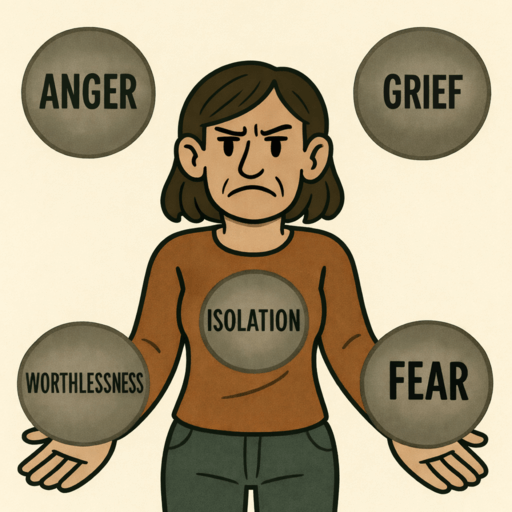
The first is direct struggle with negative emotion/the debilitated core. This includes struggles with anger and rage, sadness and grief, fear, anxiety, and panic, being bogged into worthlessness, shame, and defeat, and feeling isolated and powerless. The second is behavioral problems, usually grounded in conflict and distance, that are driven by these negative emotions. This includes relationships with people, your body, money, food, sleep, anything really. In my experience, the heart of all of these issues and problems are anchored in and expressions of a debilitated core.
Now that I’ve used the last few posts (Why We Struggle Emotionally) to explain how we unwittingly end up degrading into a state of core debilitation that inevitably expresses itself in our lives as issues and problems, let’s return to my healing journey so you can see how this played out in my life.