
In the last two posts, I’ve tried to explain how core emotion drives our on-the-ground behavior in the face of challenge, and this then generates more emotion that reinforces the core. Because of this feedback loop, we need to both heal internally and then learn how to take the choice healing gives us in how we act to learn how to nurture connection, flow, and success in our on-the-ground lives. Learning how all of this works starts in session, and is dependent upon the regulation of pressure. We initially strive to reduce the pressure created by being in session and with doing release work so you can get started in the shallow end of the pool with these challenges and find your footing with them.
This initial drive to reduce pressure in the face of challenge can lead one to believe that the less pressure that’s applied to a struggling core that’s trying to heal the better. This is not the case. The reason why speaks to the focus of this post, which involves learning how to use on-the-ground pressure in a rehabilitative way.
Initially reducing pressure for clients is focused on putting them in a middle zone of pressure that sits between experiences where there’s too little pressure and emotional stimulation and too much. When you place someone in this zone, the person can handle the burden of the pressure without creating aggravation to the emotional backlog. This creates a constructive, rehabilitative push on my client’s core healing process, allowing emotion to surface sustainably that they can then learn to meet and digest with their release work.
The title of Phase I is ‘Waking up and Struggling into healthy relationship’. There are two drivers that help my clients wake up at a core level emotionally. The first is the progressive use of the songs of Life, which helps the system wake up from a shutdown state. The second is a balanced experience of on-the-ground pressure, which then helps nudge layers of negative core emotion that are waking up to the forefront of your awareness so they can be met and worked with.
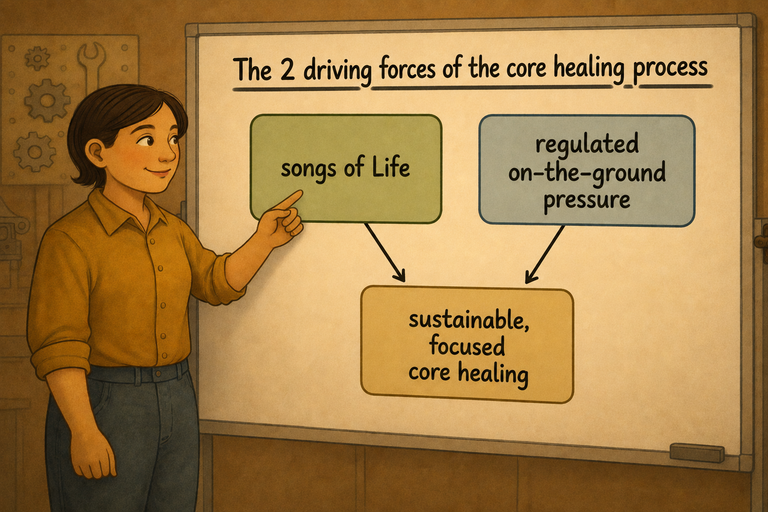
The key here is balance. Too little pressure won’t help the core emotions to surface, while too much pressure will drive you into an overloaded emotional state that aggravates. It’s the middle zone of pressure that allows you to use the challenge of a situation to access and work through the negative emotions that are driving you to struggle emotionally within it. With the skillful use of release work, this type of pressure helps you to heal as you move through an on-the-ground challenge, turning it into a rehabilitative endeavor that allows you to build in emotional strength as you traverse it instead of adding more negative emotion to your backlog as you go.
Let’s look at an example to explain how the rehabilitative way works. Let’s say I had a client named Jane that has started her Phase I work. She’s up and running with her anger release work, which means it’s flowing well, and she’s using the guidance in the Phase I manual to learn how to take it deeper as she tests out the overall effectiveness of the release work. She has also started doing some sadness release work, but is struggling to find flow with it because it isn’t as natural and easy for her to achieve.
Jane’s tendency within relationship is to stay peripheral so she doesn’t need to be seen, judged, and challenged. My initial read on her was that she needed some time with our relationship—I gave her 4 months—to stay peripheral so she could test out whether I was able to meet and attune to her in relationship in a healthy way. In the tail end of this timeframe, she started gently stepping up and engaging with me more.
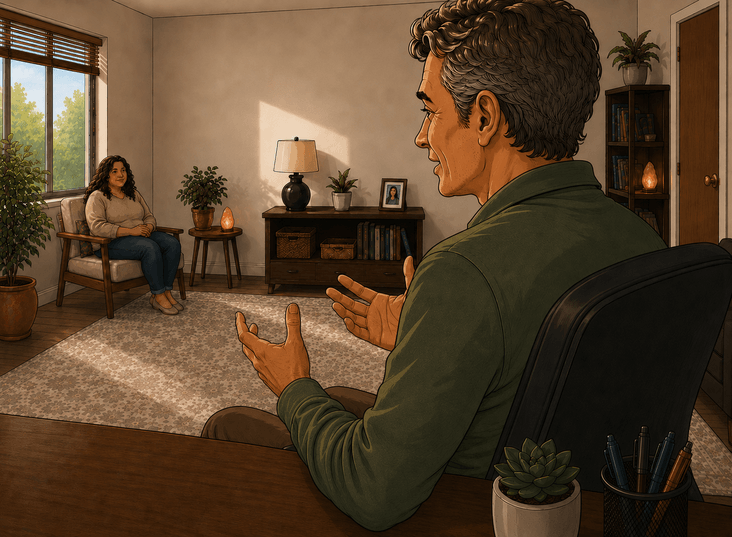
Jane’s building success with her anger release work, and her natural drive to step up more in session were both indicators that she was ready for more on-the-ground pressure. Because her sadness release work wasn’t easily opening up, it served as the ideal place to increase this pressure. This involved introducing something I call navigation work, which is where I have clients do emotional release work in session while I connect to their emotional systems so I can see into and help them navigate through their challenges with it. It’s work that is emotionally intimate and vulnerable, and therefore that inherently applies pressure to the person that’s doing it.

Jane was ready for more pressure, but how I applied it mattered. If I tried to just jump into navigation work, telling her that I felt we should do it so I can help her with her sadness release work struggle, her fear and worthlessness related to struggling with being seen would almost certainly spike, and she’d be left with a lot of emotionally based resistance to moving forward with it. But, if I explained what navigation work was, how we could modulate the level of emotional intimacy it created, and why I felt she was ready for it, she would have the chance to see that she’s being given an opportunity to step further into pressure in a supportive way with a challenge that she could use help with.
The first option would tend to overwhelm Jane, pushing her core into a place of emotional overload with emotions that she wasn’t ready to work with. The second option offered a type of regulated pressure that was more supportive and would tend to push her core into the middle zone of pressure. It offered a helpful and supportive experience of human interaction for a person that had had to stay peripheral and isolated for much of her life.
As Jane and I started doing navigation work she found that the experience of being seen and supported in a healthy way started bringing up sadness because it highlighted what she had missed out on for so many years. This pressure helped her connect with and work with her negative emotional water so it could start to surface and flow in a rehabilitative way. The more she healed through this hurt and sadness, the more her emotional system could handle stepping up and into relationship in a healthy way. This meant that the more she succeeded with her sadness release work, the more we kept striving to adjust the pressures being exerted upon her so she could remain in that middle zone.

Phase I on-the-ground work teaches my clients how to use pressure and challenge in a rehabilitative way as they start out in the shallow end of the pool. The goal is to progressively build into more and more pressure over the course of Phase I, allowing clients to learn how to skillfully regulate things as they go. As they do, they’ll learn to use something called constructs and MOs to help understand how their negative behavioral dynamics work, and what needs to be done with them to get the chance to start promoting lasting change with them.