
Unlike my emotional fire, my emotional water was so damaged that I couldn’t really start accessing and working with it until late into my healing process during my Phase III work. That was really unusual—I’ve never had that happen with any of my clients, but it’s the way it played out for me. When people heal at a core level with my approach, the process is organically divided into three phases, but there are always personal tweaks that each of us bring to it. This was mine, and it was a pretty major one that needed to be understood and allowed so my healing process could play out the way it needed to.
For me, sadness release work was more about being hurt and betrayed than just feeling sad and embittered. The depths of those emotional wounds ran incredibly deep as they related to the abuse I experienced in my childhood. That part of my emotional system basically collapsed under the burden of its debilitation. For me to reach and unearth the emotional realities of being betrayed so deeply by the people that should have been protecting and nurturing me, I had to first heal through the worthlessness and shame that came along with my abuse, which was a part of my Phase III work.
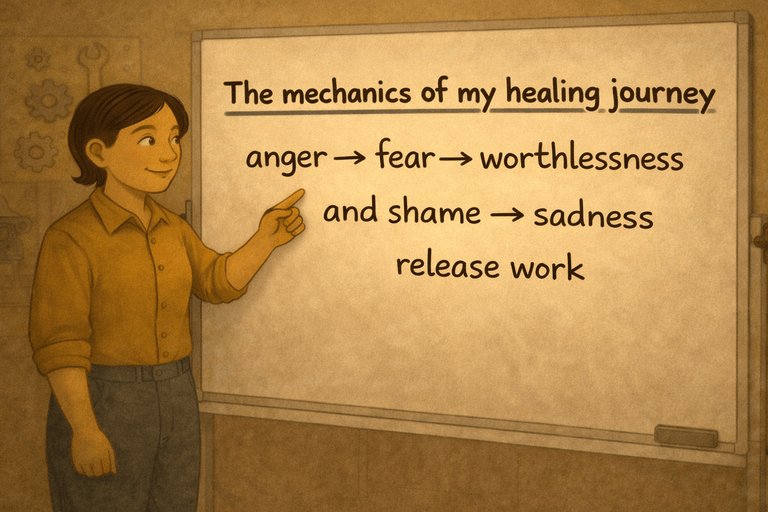
Only as I healed at this level could I really start to feel the core truth that the betrayal that was wrought upon me wasn’t my fault. This was something I knew intellectually, but that knowledge didn’t matter to my struggling core. It wasn’t until I could start to feel the truth at a bone deep level that I wasn’t abused because of who I was, or something that I had done that I could then tolerate the pain of being so betrayed. As this became emotionally possible, I was able to see and understand that my abuse occurred as the consequence of being born into a family and a situation that was sick, and so that sickness was shared with me. This shift then gave me the ability to start feeling and digesting my torn up emotional water. To call it intense would be an understatement.
I lost the ability to cry when I was young, and I then regained this ability years into my core healing process. But crying has never been a strong pathway of release for me so another pathway, called emotional yawning, kicked in to pick up the slack when I was ready to start releasing my hurt and betrayal. This type of emotional compensation is normal when a part of your system is either compromised or severely overwhelmed. Emotional yawning, which is a repetitive type of yawning that has nothing to do with being tired, isn’t known within our culture because we spend so much of our energy neglecting and ignoring the issue of emotional release. But most who go through the core healing process with me end up opening to and using emotional yawning within their release work. This type of yawning was a life saver for me because without it I simply wouldn’t have been able to release the kind of pain that most would be able to cry out.

You’d think that someone who had so much hurt and feelings of betrayal would be able to isolate and differentiate this emotion easily, but what occurs with a lot of negative core emotion is that it becomes the air you breath, or if you were a fish, the water you swim in. It’s so taken for granted that it isn’t differentiated, and so you don’t even realize it’s there even knowing it’s right in front of you. That’s how the dark cloud of hurt and betrayal existed for me until I was finally able to start healing through it so I could gain more than one experience of the water I was swimming in.
I found that, because so much of my deep-seated hurt and betrayal was grounded in my experience of humans, and because I was so deeply isolated from other people within the abuse that I experienced as a boy, much of my negative emotional water was connected to people. This led me to not like or feel comfortable being with people in a foundational way. I always kind of knew this was the way things were for me, but it wasn’t until I healed through enough of my hurt and betrayal, and I regained the ability to find a basic experience of contentment within a simple experience of relationship with another human being, that I really came to understand how cut off from the world of people my sadness, hurt, and betrayal had forced me to be.

Just as releasing my hatred towards my abusers was an act of defiance that gave me a chance to find an experience of care within myself that I could ultimately share with my world, so too did my journey into sadness release work end in an experience of liberation. I was genuinely surprised when I first started tapping into the respect that comes with returning to a state of wholeness with this part of our emotional system. We live in a culture that likes to talk about the pursuit of happiness as a primary goal of our lifeway. But we’ve oriented this pursuit towards consumerism instead of towards emotional wellbeing, and in so doing, we’ve set ourselves up for a normalized state of debilitation that keeps us from being able to find the fulfillment that comes with what I’d call a healthy and whole state of our emotional water.

When you heal through your backlog of core sadness, hurt, and bitterness, you find more than just happiness, which is a feeling that’s more oriented towards you. You find a contentment, kindness, and drive to be committed to things that combines into an experience of respect that has a lot more to do with feeling fulfilled by being a part of things than it does in simply feeling good. Sadness release work plays a critical part in achieving this. For me, it took quite a journey, but getting the chance to feeling respect towards people—including myself—at a core level was well worth the effort.