
I’ve used the last few posts to explain how we’ve normalized a state of emotional core debilitation in this culture that sits at the heart of our emotionally based struggles (Why we struggle emotionally). Now I want to share how this state played out in my life. It’s worth mentioning that, when people that are struggling emotionally start working with me, my explanations about core debilitation don’t really make sense to them. This is because they usually have to start healing at a core level before they start to wake up to what core emotion is, and how much of it they have learned to suppress and deaden.
By the time I turned 13, I was an emotional zombie. I was torn up at a core level but deadened to much of my pain. I had suppressed my whole life to this point, so the level of deadening was extreme in my case. At the same time, how my deadened debilitation drove me was rather normal. It drove me to be a part of life in ways that generated conflict and distance instead of connection and flow with what I was engaging with, and set me up to further deepen and solidify my debilitation because of this. And, because I was blind to how torn up I was, I had no idea why I was trapped in this pattern, or how to bring any real change to it.
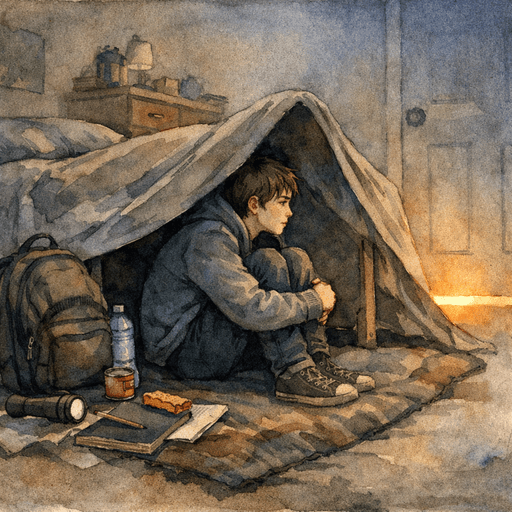
Because of the abuse I went through as a boy, I was put into survival mode from a young age. By the time I was a teenager and the abuse had stopped, all my energy was focused on something that, at the time, I probably couldn’t have even put into words—escaping the prison of my homelife where I still had to live with or near those that abused me, and those that let it happen.
I was going to a private school by the time my abuse stopped, and the school carried an expectation that all its students would continue on to college once we finished high school. I latched onto this idea as a way to escape. The problem was that my emotional debilitation was driving things. I felt so terrified and worthless about who I was, what I deserved, and how I was doomed to fail and to stay trapped that these emotions drove me to dive headlong into my studies in a manner that was completely unsustainable.
A person with a healthy emotional system would have leaned into the challenges of my studies in a caring and respectful manner that he could trust because it had integrity so he could find his fit with and fulfillment in them. With my debilitated core, which was so deeply angry and hurt about the terrifying reality that I deserved to be isolated and alone because I was a worthless piece of trash, I desperately dove into my studies, piling on the work, trying to excel to an extreme level across all subjects in a punishing manner that felt normal to me.
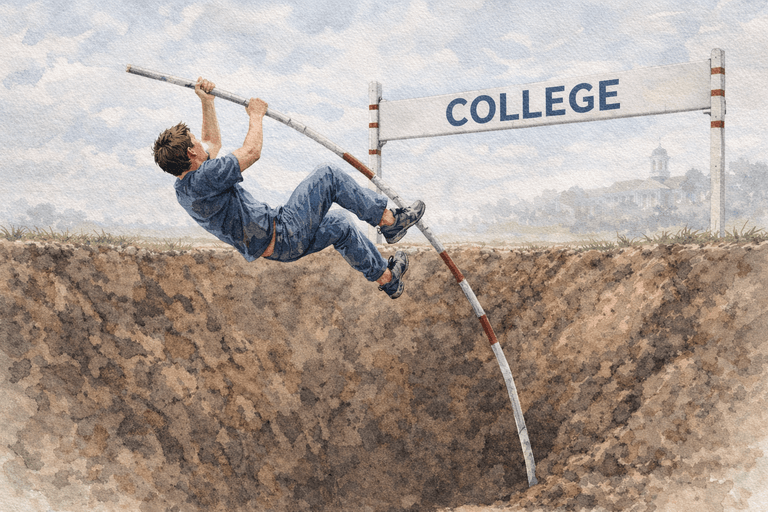
None of this was conscious. At that time, I was completely emotionally ignorant, so I simply acted from my place of core emotion, and it led me to have ridiculously high expectations that could hopefully counterbalance the core emotional truth that had been burned deep into me. This led me to take on way too much, to fall short with some of what I was doing, and to ultimately burn out on the whole experience of academics. In other words, it led me to set myself up for failure, which was what I knew at a core level I inevitably deserved.
By my junior year of high school, I had been engaging with my pursuit to escape for a few years, but cracks in my approach had appeared. I was shooting for perfection, which is impossible to achieve because none of us are perfect. Each small ‘failure’ that I was having was experienced emotionally as a terrifying clarification that I’d never be able to escape from my prison.
That year, I was in an Advanced Placement, college level biology class that I shouldn’t have been in because I wasn’t good at the sciences. Part of the way through the year, we had a major test that would decide a large part of our grade, and I did poorly even though I studied really hard for it. I don’t remember what the grade was, but it was probably totally acceptable—maybe a B-. But for my desperate circumstances, this ‘failure’ was the straw that broke the camel’s back. I somehow got my teacher’s phone number and called him that evening to confirm that the grade he gave me was correct. When he confirmed it, and I got off the phone with him, I slumped onto my bathroom floor and collapsed into a sobbing, shaking mess.

Core emotions run so deep, and are so powerful that even when they’re shut down and shoved into the background, they always drive how we engage with life. You could have tried to logically explain to me how a B- was fine, and that I was doing exceptionally well scholastically, but thoughts and ideas don’t impact core truths. Nor does tangible, on-the-ground experience change them. Core truth is emotionally based, and so the only way to change it is to heal through its debilitation, which was a concept that would have meant nothing to me at the time.
That night when I collapsed on my bathroom floor marked a breaking point for me when it came to academics. In one night, I accepted that I wasn’t going to be able to use academics to escape, and in so doing, I stopped wanting to have anything to do with school. Because of the success I had built for years, I was able to coast through the rest of high school and get into some colleges. I didn’t want to go to college at that point because I was so burnt out on school and had established such an emotionally toxic relationship with it. My father was a strong believer in the value of higher education, so he offered to pay for college. I decided to go simply because it was the most expedient way to escape.
My story with academics shares a sad and frustrating point about core debilitation. In the end, I did escape my home by going to college. Unfortunately, I escaped in a way that only reinforced my debilitated state, driving me deeper into what was my real prison, which was the pain and awfulness that sat within me.