
In my experience, our general approach to negative emotion in this culture is to suppress, ignore, and cover it over. Why do we resonate with an approach that’s so mechanically unsound? I’ve found this drive is grounded in a natural and sound response we have when our physical bodies get torn up and bleed. When this occurs, you always want to suppress the bleeding so you can help the body plug the leak.
I often link emotional evacuation to the ways in which the physical body evacuates organic wastes by way of sweating, peeing, exhaling, and pooping. Comparing these two types of evacuation works to a point, but they’re not perfectly analogous. The physical body evacuates wastes so it can maintain a healthy state. It also evacuates wastes that are created when the body gets torn up and needs to clear out the damage that’s been created by the trauma that has caused the injury.
The emotional system is a bit different in when it needs to clear out wastes. When it’s healthy and whole, it doesn’t need to evacuate because wastes aren’t being created within its normal operation. It’s only when overwhelming amounts of pressure are exerted on the system, and damage is created within either the central or core layers that things need to be cleared out so healing can occur. You can jump back to the 02 Why do we have emotions? post to review how this works.
The emotional system needs to evacuate emotion that comes from overwhelming amounts of both positive and negative pressure that’s exerted upon it. For example, imagine a 10 year old getting up in front a big audience to sing a song. It’s normal for him to be scared, and to need to cry out that fear as he’s standing in the face of this pressure. That’s the emotional system evacuating some negative central layer emotion. Then, if the crowd gives him a standing ovation after he performs well, he might need to hop around on the stage, to whoop, or to cry out the overwhelming amount of positive pressure that’s now being applied to him. As I’ve written, central layer trauma is similar to getting bruised emotionally. It’s not a big deal in and of itself UNLESS the waste that gets created isn’t allowed to be cleared out.

When we get torn up emotionally, we experience emotional pain in a variety of emotional colors. This experience is analogous to having blood seeping from a physical wound. When this occurs, we tend to have the same type of response that we would have when we get torn up physically—we want to suppress the bleeding so we can stop it. This response feels right, but unfortunately, it’s not mechanically sound. The reason why has to do with nuance.
I’m going to make some generalizations about men and women so I can explain what this nuance is all about. Generally speaking, in native cultures of the past, men learned to step up and fight wars to protect the homeland that their people completely depended upon to be able to live and thrive. Women learned to step up and to give birth so they could bring forth the next generations so there would continue to be people to be a part of that homeland. Both endeavors were dangerous, and could easily lead to the death of the participants.

When men go out and get torn up physically in battle, suppressing the flow of blood from injury is a clear cut, black and white endeavor that we all understand. But there’s more nuance by way of the female perspective. Women learn that suppression of blood flow is logical when they or others get injured, but that there’s another type of blood flow that needs to be accepted and permitted that has to do with their ability to get pregnant.
The monthly menstrual cycle is unique to women, and it cannot be suppressed without creating very negative consequences. This flow isn’t created from injury, but it is a result of the woman’s body needing to shed the uterine lining that hasn’t been fertilized and is no longer viable. Physical waste is created and it needs to bleed out so the woman’s body can stay healthy and whole. This bleeding process is often painful and uncomfortable, but because it’s a non-negotiable part of the process of staying healthy, it’s accepted and attended to by all women so it can occur in a healthy way. This leaves women with a more nuanced understanding of how one needs to respond to bleeding, and this is the nuance that applies to the needs of our emotional systems.
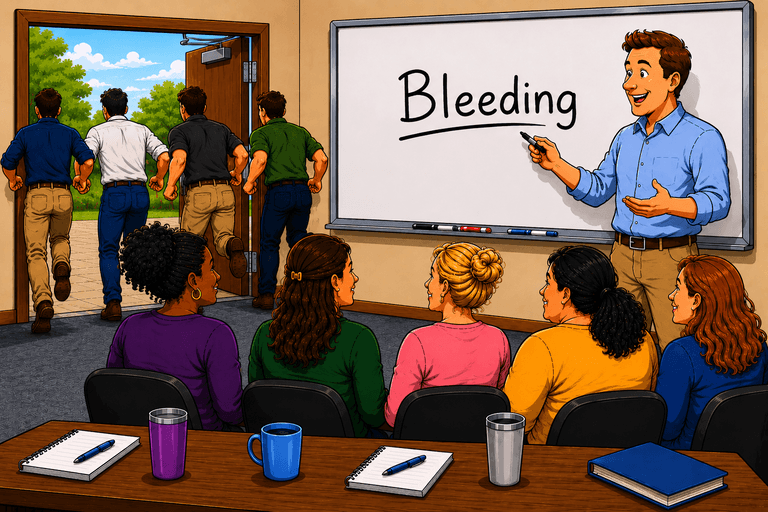
It’s at this point in this post that I’m expecting many of the men that have found their way to this blog to feel quite uncomfortable. ‘Let the women bleed out their negative emotions,’ you might think and feel. ‘I’m not going to be a part of anything that has to do with menstruation.’ Being a man myself, I know addressing emotional evacuation in terms of menstruation can feel uncomfortable and counterintuitive. But with that said, that’s about as far as my sympathy goes. Sorry gents, but it’s time to man up—if any of you are still reading!—and to accept the fact that we all need to get more nuanced about emotional injury so we can help our emotional systems evacuate negative emotion in healthy ways.
Emotional evacuation isn’t directly analogous to either pooping or menstruating. In the end, it’s a unique type of need that has similarities to both of these ways that our bodies evacuate wastes. I’ve written this post as a way to help readers understand why emotional evacuation can feel so counterintuitive. We live in a patriarchal culture that has taken a masculine, black and white perspective on suppressing emotional evacuation that doesn’t work mechanically. The simple truth is that men don’t menstruate, but they do bleed emotionally, and they—along with women—need to be willing to allow and support this organic process if you want to accept the presence of the system within us that allows all of us to experience the life that we all hunger to be a part of. That’s where emotional release work comes in. Fight it if you need to, but mechanics are mechanics, and in this case, I assure you that they demand that we all learn how to evacuate negative emotion in healthy and private ways.